
Layer-by Layer — Creative Engines:

Step 2: You’re Ready for your CAD
Now that you have your business plan for your prototype (if you don’t, you’ll want to read Step 1 first), you’re ready for the fun part — completing the design in a format that can be prototyped. In other words, it’s time to get a CAD design! And that means you’ll need an engineer.
If you have an engineer friend, family member, acquaintance, roommate, or neighbor you talk to who is more than happy to trade a design for goods, services, or a hug. Then you can probably have them do this step for you and proceed to Step 3 (unless speed-dating engineers sound like a good time to you). If you don’t personally know an engineer and you’re like, “What is CAD?” Then, in your prototyping journey, it’s time to speed-date some engineers!
What is a CAD and why do I need one?
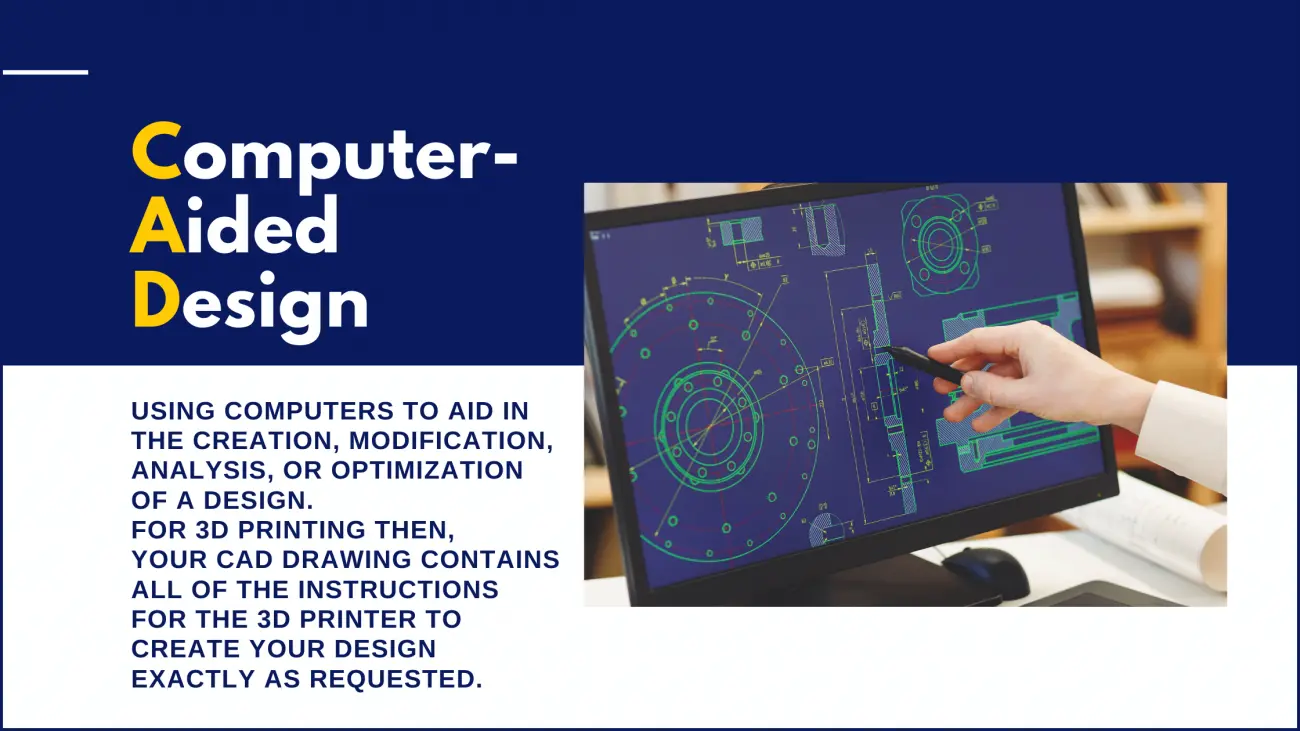
A CAD drawing is a Computer-Aided Design (CAD) drawing that uses computers to aid in the creation, modification, analysis, or optimization of a design. So, why do you need a CAD for 3D printing? Your CAD drawing contains all the instructions for the 3D printer to create your design exactly as requested. With 3D printers, rules and instructions are THE name of the game. It’s how you end up with the exact design requested, right in the palm of your hand. The CAD drawing tells the 3D printer how much material to deposit and where to deposit it, and almost like magic, that’s how you go from a drawing on the computer to an object in your hand … Which is all to say that the successful printing of your prototype is highly dependent on your CAD file.
Okay, but I don’t know how to use CAD…
That’s okay because there are a lot of engineers out there who don’t just understand CAD design … They live for it. For some, designing something interesting in CAD is a fun way to spend a Friday evening (you think we’re joking, we’re not). The tricky part about getting a CAD design for your prototype isn’t the attempt to find someone, ANYONE, to create it. The tricky part is figuring out how to find the right engineer or aspiring engineer to design it for you for the right price.
Time for some speed-dating!
We mean speed-dating engineers (you can save that other thought for another time when prototypes aren't our focus). Because there are A LOT of different kinds of engineers, and depending on your prototype and your budget, one will make sense, while another is nonsensical. A few of the types of engineers that will most likely fit your prototype project:
- Mechanical Engineer — These wonderful people are the Jack and Jill of all Engineering. Though they tend to focus on power-producing machines, their coursework is relatively diverse in terms of engineering courses. So, when in doubt, you may want to opt for a mechanical approach.
- Product Engineer — Obvious fit because they are responsible for literally designing and creating products based on customer needs. However, keep in mind that these engineers tend to be highly specialized, which can make them quite expensive.
- Manufacturing Engineer — We know you’re just making a prototype. However, if your goal is manufacturability, designing your prototype to fit manufacturing processes best could put you ahead of the curve when it comes time to manufacture your product.
- Program Engineer — if you’re looking for an engineer who understands engineering but excels at program management (because maybe organization and timelines aren’t your thing), a program engineer could be the perfect fit for you.
We know you’re thinking, cool, ‘Where do I find one of those?’
Now, this is where your speed-dating skills truly shine!
First, find your potential dates (engineers)! We recommend seeing them online. Have you tried posting your gig on Craigslist? It might sound silly, but we’re kind of not joking. Or Facebook? Have you contacted the engineering department at a nearby university or community college? We guarantee that there are aspiring engineers who will be significantly cheaper than professionals and are eager to make a little money testing out their new skills. In your ad, share your perfect date: Experience required, project details (as many as you’re willing to share), project timeline, budget, etc.
Second, set up your dates! Whether it’s in-person or virtual, you’ll want to meet your potential partners to find the perfect fit. And if you’re worried about it, now would be the time to send them a non-disclosure agreement (NDA) so that you have it on file before you get into the details of your prototype. If they refuse to sign the NDA, you don’t want to work with them anyway.
Third, go on those dates! We highly recommend that you request work samples, and here are a few questions that will probably help you find your engineering match:
- What is a recent design project you completed? What made it challenging, and how did you overcome that?
- Have you designed products for manufacturability? What were the unique challenges of that project?
- What is your rate, and how long does your average project take to complete?
- When you’re creating a CAD for a client, what is your process?
- Have you ever had to modify a client’s design to improve manufacturability? How did you approach that conversation?
- Have you designed for additive manufacturing (3D printing) before?
- How many revisions are included in our initial monetary agreement?
Although you may need to conduct a few follow-up interviews, you should eventually find your perfect match. And that means in a short time, you’ll have a CAD drawing in hand.
Thinking you’re done?
Not quite. Now, you need to determine your goals for your prototype. Are you going for proof of concept or an investor “show and tell?” Or are you testing for look and feel? Only after determining your goal can you finally decide on how to manufacture your prototype. Jump over to our next blog post to tackle Step 3!
For more information, please don't hesitate to contact us at or request a quote and upload your file today!